
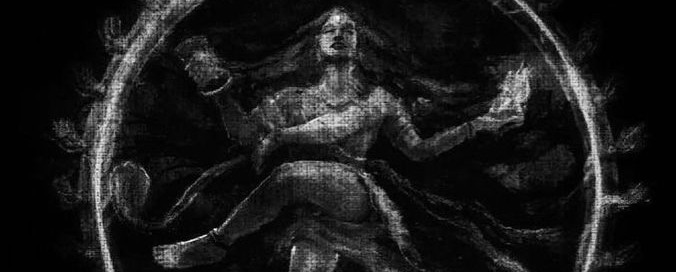
Bharata’s Nāṭyaśāstra occupies a unique position in the history of Indian thought. It is simultaneously a treatise on drama, dance, music, poetry, architecture, ritual, performance, and aesthetic experience. Its Vedic foundations are therefore not restricted to occasional references to the Vedas. They are embedded in its very conception of nāṭya: its origin, purpose, performance, sacred space, sound, gesture, and theory of rasa. The Nāṭyaśāstra presents drama as a continuation and transformation of Vedic knowledge, creating what it calls the Nāṭyaveda or “fifth Veda.”
The most explicit statement occurs in the first adhyāya. The sages ask Bharata about the origin of the Nāṭyaveda, describing it as vedasammita—“comparable to the Veda” (Nāṭyaśāstra 1.4). Bharata then recounts how, when society had become affected by desire, greed, jealousy, anger, and suffering, the gods approached Brahmā and requested an art that would be both dṛśya and śravya, something capable of being seen and heard. Brahmā therefore resolved to create a fifth Veda, accessible to all social groups and capable of teaching dharma, artha, and proper conduct (1.12–15).
This origin story is crucial. Nāṭya is not conceived merely as entertainment. It is a means of representing human action and its consequences. Brahmā describes it as containing instruction, traditional knowledge, guidance for future generations, and the essence of the śāstras and arts. In other words, drama becomes a comprehensive mode of cultural knowledge. It translates abstract principles into visible human situations. The Vedic world of knowledge is thereby transformed into a form capable of being experienced through narrative, music, movement, and emotion.
The most famous Vedic connection follows immediately. Brahmā creates the Nāṭyaveda from the four Vedas: pāṭhya, the recitative or textual component, is taken from the Ṛgveda; gīta, song, from the Sāmaveda; abhinaya, dramatic representation, from the Yajurveda; and rasa, aesthetic sentiment, from the Atharvaveda (Nāṭyaśāstra 1.16–18).
The passage should not be understood merely as a literal claim about the historical derivation of theatre from four Vedic Saṃhitās. Its deeper importance is conceptual. Bharata is constructing a complete theory of performance from four dimensions of sacred knowledge: verbal expression, musical expression, embodied action, and affective experience. The Vedic corpus becomes a symbolic foundation for an art in which word, sound, body, and emotion are brought together.
The idea of the Nāṭyaveda as a “fifth Veda” is equally significant. The narrative explains that the existing Vedas were not accessible to everyone, and therefore nāṭya was created as a sārvavarṇika form, intended for all. This makes drama a medium of cultural transmission. What the Vedic tradition preserves through śruti, ritual, and disciplined learning, nāṭya makes available through representation. The theatre therefore becomes a kind of public pedagogy: one can encounter dharma, artha, desire, conflict, virtue, error, prosperity, suffering, and liberation through stories embodied before an audience.
The Vedic character of nāṭya is also visible in the sacred preparation of the theatrical space. The second adhyāya, dealing with the construction of the nāṭyamaṇḍapa, treats the playhouse through the vocabulary of vāstu, ritual purification, offerings, auspicious timing, mantras, and the invocation of deities. The construction of the theatre is therefore not equivalent to constructing an ordinary building. It is a consecration of space. The foundation ceremony includes the sounding of musical instruments, offerings in different directions, and ritual offerings of ghṛta, pāyasa, and other substances.
The third adhyāya makes this ritual character even more explicit. Before performance, the stage is consecrated through raṅgapūjā. Bharata prescribes the invocation of a remarkable range of divine and cosmic powers, including Brahmā, Śiva, Viṣṇu, Indra, Skanda, Sūrya, the Aśvins, Soma, the Maruts, the Lokapālas, Agni, the Gandharvas, the Apsarases, the ṛṣis, and the Pitṛs (Nāṭyaśāstra 3.4–10).
This ritual environment recalls the Vedic understanding that sacred action takes place within an ordered cosmic field. The stage is not merely a neutral platform upon which actors perform. It becomes a ritually protected space in which divine, human, and artistic worlds intersect. Bharata even compares the merit of worshipping the gods of the stage with that of a Vedic sacrifice and insists that no performance should begin without proper consecration (3.94–102).
The analogy between yajña and theatrical performance becomes particularly suggestive here. Both require preparation, correct procedure, appropriate space, specialised performers, prescribed sounds and gestures, offerings, and attention to ritual order. The hotṛ performs the sacrifice through correctly uttered sacred speech; the actor performs the drama through speech, movement, gesture, costume, and emotional representation. In both cases, improper execution can destroy the intended result. Bharata explicitly compares an incorrectly performed stage offering to a Vedic ritual in which ghṛta is poured into the fire without the appropriate mantra (3.99–101).
The connection extends to the pūrvaraṅga, the preliminary performance that precedes the principal dramatic action. In the fifth adhyāya, the director performs prescribed movements, approaches the central Brahmamaṇḍala, offers flowers, and honours Brahmā before the dramatic presentation proceeds. The theatrical event is thus ritually inaugurated rather than simply begun.
Sound provides another major point of Vedic continuity. The Vedic tradition regarded precise sound, accent, rhythm, and metre as essential to the integrity of sacred utterance. Bharata’s Nāṭyaśāstra likewise treats pāṭhya, gīta, svara, tāla, chandas, and musical instruments as integral components of performance. The actor’s speech is not merely a carrier of narrative information; its pitch, rhythm, modulation, and delivery contribute to the dramatic experience. The ancient Vedic concern with śabda therefore finds a new artistic field in theatre.
This relationship becomes even more profound in the theory of rasa. Bharata’s sixth adhyāya famously begins by distinguishing rasa and bhāva and proceeds to formulate the principle that rasa arises through the combination of vibhāva, anubhāva, and vyabhicāribhāva (Nāṭyaśāstra 6.2–10). The word rasa carries an older semantic history of essence, flavour, sap, and experiential “taste.” Although Bharata’s aesthetic rasa should not simply be equated with every earlier Vedic use of the term, the conceptual resonance is important. Something latent becomes experienceable through a transformative process.
The connection with yajña offers a useful analogy. In sacrifice, an ordinary substance becomes an offering through ritual action; in nāṭya, ordinary human emotions become aesthetic experience through artistic representation. Love, grief, anger, heroism, fear, disgust, wonder, and tranquillity are not presented merely as private psychological states. They are organised through vibhāva, anubhāva, and other bhāvas until they become something that the sensitive spectator can experience as rasa. The personal is transformed into the aesthetic and, ultimately, into a shared mode of experience.
The Vedic element in Bharata’s Nāṭyaśāstra is therefore best understood as a transformation rather than a simple borrowing. The yajña becomes a model for ordered performance; śabda becomes theatrical speech and music; sacred space becomes the consecrated stage; divine invocation becomes raṅgapūjā; and the ancient culture of sound and ritual becomes a comprehensive science of performance.
Most importantly, Bharata does not separate aesthetics from human transformation. The purpose of nāṭya is not merely to reproduce life but to reveal its patterns, consequences, emotions, and values. It can instruct without becoming dry doctrine and delight without becoming morally empty entertainment. This synthesis reflects a profoundly Indian understanding of art: knowledge can be embodied, philosophy can become narrative, and wisdom can be experienced through beauty.
The Nāṭyaśāstra consequently represents one of the most remarkable transformations of the Vedic imagination. The Veda remains the source of its authority, but nāṭya expands the field of sacred knowledge into theatre, dance, music, gesture, architecture, and aesthetic experience. From mantra to performance, from yajña to raṅgapūjā, and from sacred sound to rasa, Bharata demonstrates how the Vedic concern with order, sound, consciousness, and transformation could evolve into one of the world’s most sophisticated theories of the performing arts.

