
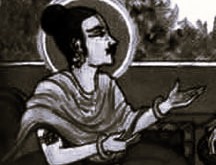
Bhāsa occupies a foundational position in the history of Sanskrit drama. Although the precise date of the playwright remains debated, he is generally regarded as earlier than Kālidāsa, and the plays attributed to him—including Pratijñāyaugandharāyaṇa, Svapnavāsavadattam, Pratimānāṭaka, Madhyamavyāyoga, Karṇabhāra, and Urubhaṅga—demonstrate an extraordinary familiarity with the epic and religious imagination of ancient India. The attribution of all thirteen extant plays to Bhāsa is not beyond scholarly debate, but the traditional corpus associated with his name provides a remarkably rich field for studying the continuity between Vedic culture, epic narrative, and classical Sanskrit drama.
The Vedic presence in Bhāsa is rarely a matter of directly reproducing Vedic hymns. It is more often visible in the assumptions governing his dramatic world: yajña, śrāddha, dāna, vrata, saṃskāra, tapas, the authority of the ṛṣi, the sanctity of the Veda, and the relationship between royal power and sacred obligation. His dramas therefore reveal a society in which ritual and political life have not yet become separate spheres. The king is not merely a political ruler, the sage is not merely a religious specialist, and sacrifice is not merely a private religious act. Each participates in a larger conception of dharma.
One of the clearest examples appears in Pratimānāṭaka. The play is based on the Rāmāyaṇa tradition, but Bhāsa repeatedly places its characters within a recognisably Vedic intellectual environment. Rāvaṇa, when disguised as an ascetic, presents himself as one who has studied the Veda with its branches, along with various other bodies of knowledge. The significance of this passage lies not in whether Rāvaṇa’s claim should be taken as morally credible, but in the cultural ideal it presupposes: knowledge of the Veda is presented as one of the defining marks of an educated and spiritually accomplished person. Even the antagonist of the drama must possess an impressive intellectual and ritual background.
This produces an important distinction between knowledge and ethical transformation. Rāvaṇa can possess vidyā and yet remain governed by ahaṃkāra and desire. Bhāsa thereby preserves an old Indian concern: sacred knowledge cannot be reduced to possession of information. Its true value depends upon how knowledge is embodied. The drama consequently transforms the Vedic ideal of learnedness into a question of character. What matters is not simply whether one knows the sacred texts, but whether knowledge has altered one’s relationship with dharma.
A second powerful example occurs in Dūtaghaṭotkaca, when Gāndhārī and Dhṛtarāṣṭra respond to the death of their sons. They wish to perform tarpaṇa for the departed on the bank of the Gaṅgā. This is more than a detail of mourning. The act places grief within a ritual structure through which the living maintain their relationship with the dead. The Vedic world does not imagine death as an absolute severance. Through Pitṛyajña, remembrance, offering, and ancestral obligation, the departed remain part of a larger continuum linking generations.
The same ritual consciousness is visible across Bhāsa’s Mahābhārata plays. References to sacrifice, śrāddha, dāna, vrata, and other ritual observances demonstrate that the epic world inhabited by his characters is structured by obligations extending beyond the individual. The concept of the pañca-mahāyajña—brahmayajña, devayajña, pitṛyajña, bhūtayajña, and nṛyajña—need not be mechanically imposed upon every scene, but the practices associated with these obligations form part of the cultural background represented by the dramas.
The third and perhaps most dramatic example is Pañcarātra, where the political conflict surrounding the Kuru princes is framed through the yajña of Duryodhana. The play is distinctive among Bhāsa’s Mahābhārata dramas because it moves away from the inevitable violence of the epic war and concludes with reconciliation. The sacrificial setting becomes an opportunity for political transformation rather than merely ritual display.
This is particularly significant when read against the Vedic understanding of yajña. Sacrifice is fundamentally an act of ordering and renewing relationships: between humans and deva, between ruler and community, between offering and reciprocity. Bhāsa places political relationships within such a framework. The sacrificial occasion creates a space in which hostility can be suspended and obligations renegotiated. The result is not simply a religious ceremony occurring in the background of the drama; the yajña becomes part of the mechanism through which social order can be restored.
The relationship between kingship and sacred obligation is equally important in Pratijñāyaugandharāyaṇa and Svapnavāsavadattam. Udayana’s political fortunes are repeatedly placed in tension with personal desire. Yaugandharāyaṇa’s apparently ruthless political strategies are ultimately directed towards the restoration of his king and kingdom. Modern scholarship has rightly observed that these plays form a bridge between the emotional world of Sanskrit drama and a harder political concern with artha and royal duty.
This tension between personal emotion and larger obligation has an important Vedic resonance. The Vedic conception of ṛta presupposes that individual action exists within a larger order, while later dharma increasingly articulates the obligations appropriate to particular persons and circumstances. Bhāsa’s kings constantly encounter this tension. A ruler may possess personal attachments, but his decisions cannot be governed entirely by private emotion. Political responsibility becomes a form of disciplined self-transcendence.
The Mahābhārata plays offer another dimension of this inheritance through the figure of sacrifice itself. In Karṇabhāra, Karṇa confronts the moral and existential consequences of the obligations that define his identity. His famous generosity is not merely a personality trait; it belongs to the larger cultural ideal of dāna. The willingness to give even when giving becomes personally destructive evokes the sacrificial logic in which something valuable is relinquished for a principle larger than the self. Bhāsa turns this cultural ideal into tragic drama.
Similarly, Urubhaṅga transforms the epic battlefield into a space of moral recognition. Duryodhana, defeated and physically broken, is no longer simply the antagonist of the Mahābhārata. In his final moments he becomes capable of recognising the consequences of his actions, his relationships, and the destruction around him. The play does not erase his adharma, but it complicates the moral landscape by allowing suffering to produce insight. This movement from external power towards inward recognition echoes the broader Indian transformation of heroic values through dharma and spiritual reflection.
The Vedic element in Bhāsa is therefore not confined to explicit references to the Veda or ritual practices. It survives in the architecture of his dramatic universe. Knowledge carries responsibility; sacrifice creates relationships; death does not erase ancestral obligation; kingship is inseparable from dharma; generosity can become a form of self-offering; and personal desire must repeatedly negotiate with a larger order.
Bhāsa consequently represents an important stage in the transformation of Vedic culture into classical Sanskrit literature. The Vedic world of yajña, ṛṣi, Pitṛ, deva, dāna, sacred knowledge, and cosmic-social order has entered the theatre, but it has not remained static. It has become character, conflict, choice, and consequence. The altar has become a dramatic setting; ritual obligation has become political responsibility; and the ancient question of how an individual participates in a larger order has become the central problem of human action.
In this sense, Bhāsa’s plays demonstrate that the movement from Veda to epic and from epic to classical drama was not a movement of abandonment. It was a process of transformation. The Vedic imagination survived precisely because it could enter new literary forms while retaining its fundamental concern with the relationship between knowledge, action, sacrifice, and dharma.

