
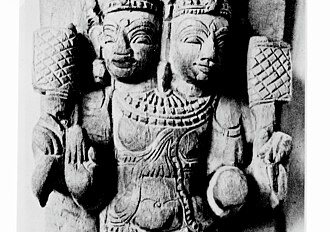
In the first sukta of the third mandala, we were initiated into the mystery of Agni’s birth. The Rishi of the second sukta is Vishwamitra, the deity is Vaishvanara Agni, and the meter is Jagati.
Many Names of Agni
‘Eka evāgnir bahudhā samiddhaḥ’ – The fire is one, but it is kindled in many ways (8.58.2). Sometimes he is ‘Vaishvanara’, sometimes ‘Rakshoha’-sometimes ‘Jatavedaḥ’, ‘Draviṇodāḥ’, ‘Tanūnapāt’, ‘Apāṃ Napāt’, or ‘Narāśaṃsa’. In this way, he has various names according to his manifestations.
Primacy of Vaishvanara
Among these, from the perspective of thought and practice, a characteristic of his Vaishvanara form is seen in the Samhita, Brahmana, and Upanishad. In the Samhita it is said, ‘Viā idagne agrayaste anye’- O Vaishvanara, the other Agnis are your branches (1.59.1); ‘vaiśvānaro jyeṣṭhebhyastebhya agnibhyaḥ’ – Vaishvanara is the eldest among all those Agnis (Atharva 3.21.6); the Shatapatha Brahmana says, ‘vaiśvānaro vai sarve agnayaḥ’ – Vaishvanara is indeed all the fires (12.1.35, 36); in the Chhandogya Upanishad, Vaishvanara, is the measure of a span [the individual soul] and yet identical with the whole [the universal soul] (prādeśamātramabhivimānamātmānaṃ 5.11.24).
Vaishvanara in Ṛgveda
In the Ṛgveda, thirteen sūktas composed by various Rishis are dedicated to Agni Vaiśvānara, marking a significant thematic thread across the Mandalas. These include the realisations of Nodhās (1.59), Kutsa (1.98), Viśvāmitra (3.2, 3, 26), Vāmadeva (4.5), Bharadvāja (6.7-9), Vasiṣṭha (7.5, 6, 13), and Mūrdhanvan (10.88). While Vaiśvānara is almost exclusively an epithet of Agni, the Viśvadevas are once collectively addressed as vaiśvīnarāḥ [8.30.4; cf. Vājasaneyi 11.58], highlighting the non-dualistic core of Vedic thought: the manifestation of the One Fire in all, and the presence of the All-Gods within each diverse manifestation, are identical spiritual realisations. The genesis of this universal fire is linked to the purification of the life-energy. It is said that the flowing stream of Soma gave birth to Vaiśvānara, the “Great Light” [9.61.16]. This bṛhat jyoti of the Samhita is the precursor to the Brahma-jyoti of the Upanishads. Thus, in the higher spiritual context, Vaiśvānara serves as a functional definition of Brahman- the Vast Light that sustains all individualities.
Earthly, Mid-space, or Celestial Deity
While the Nighantu (3.1) simply includes Vaiśvānara among the names of Agni, ancient teachers have deliberated deeply on his true identity. This debate is recorded in Yāska’s Nirukta (7.21-31) and hinges upon a fundamental question regarding where the starting point of spiritual practice should be. Some teachers of the etymological school, the Nairuktas, argued that Vaiśvānara is a middle or intermediate space deity, identifying him as the lightning, the wind, or Indra. Conversely, the ancient sacrificers or Yājñikas maintained that Vaiśvānara is Āditya (the Sun) in the celestial realm. Refuting both sides, Ācārya Śākapūṇi established that this earthly Agni is indeed Vaiśvānara, a view that was ultimately supported by Yāska. These are not contradictory locations but rather different stages of the same conscious light. In the Ṛgveda, Vaiśvānara is described as triṣadhastha, the one who abides in the three abodes (6.8.7). While Agni was introduced in the first sūkta as a child of light descending into the mortal receptacle, in Sūkta 3.2, we witness his universal form. He is the spark of conscious fire kindled on earth that expands to shine with the brilliance of Āditya, representing individual consciousness transformed into universal consciousness.
Etymology
The root of the word Vaiśvānara is Viśvānara, which Pāṇini identifies as a proper noun (6.3.129). The construction parallels Viśvadeva, creating a conceptual pairing that echoes the Divyaugha (Divine Stream) and Mānavaugha (Human Stream) found in Tantric traditions [Paraśurāma Kalpasūtra 1.1]. In the Ṛgveda, Viśvānara is an epithet for Savitā in 1.186.1, 7.76.1 and for Indra in 10.50.1. Indra is addressed as viśvānarasyapatim, the Lord of the Universal Human (1.61.4), who has become all things [viśvānarāya viśva-bhuve – 10.50.1]. Spiritually, this etymology clarifies the descent of divine power into the individual. Savitā represents the celestial deity of light, while Indra represents the intermediate space deity of mental power. The earthly Agni, or individual consciousness, manifests as the offspring of both; he is the brilliance of Savitā, and the power of Indra combined. Yāska explains that one can infer a single deity pervading all beings, whom he calls Viśvānara, and from this source comes Vaiśvānara (Nirukta 7.21). This etymological descent- from the universal to the individual- explains how the divine enters our mortal frame, yet the Samhita focuses predominantly on the glory of what this fire becomes once it is kindled within us.
All-pervading
Vaiśvānara is of celestial origin (diviyoniḥ, 10.88.7), being born in the supreme ether (jāyamānaḥ parame vyomani, 6.8.2). Yet, he exists simultaneously in all three worlds (triṣadhastha, 6.8.7). He functions as the head of the celestial realm and the navel of the earth, traversing the intermediate space that joins the two (mūrdhā divaḥ nābhiḥ agniḥ pṛthivyāḥ atho abhavaḥ aratī rodasyaḥ, 1.59.2). His all-pervading radiance is said to have touched both the celestial and earthly realms while completely filling the vast space between them (rodasī, 3.2.2, 1.98.2, 10.88.1, 10.88.3). Ultimately, Vaiśvānara is identified as the navel of the entire universe (nābhir kṣitīnāṃ, 1.59.1) and resides within its very head (mūrdhānaṃ divo, 10.88.5). He is the Universal Form himself; from his head, the universe and the seven streams of life have sprouted like branches, and the entire cosmos is viewed as his vast expansion in all directions (tasya hi mūrdhnaḥ pṛthivī uta dyauḥ sindhava urmiyā nabhaś ca, 6.7.7). This Vedic description directly parallels the Vaiśvānara-vidyā of the Upanishads (Chāndogya 5.11-18), where the various parts of the universe- Heaven of bright light (Sutejas), the sun as his eye, the air as his breath- are seen as the limbs of this one Universal Soul.
Universal Creator
Agni is the maker of all (viśvākṛt), having all-encompassing radiance (abhibhṛt), the universal human (viśvānaraḥ), the universal fire (vaiśvānaraḥ) – 10.88.14. All the worlds originate and abide in this immortal light-god [arko devo amṛto jajāna yasmin viśvā bhuvanāni tasthuḥ, 10.88.4]. This manifestation through light carries a similar implication to the vyāhṛti of the later tradition and the nāda or primordial sound of Tantra, signifying a projection of the supreme reality into form. He is the sahasraretā vṛṣabhaḥ, the bull with a thousand seeds, who moves restlessly to impregnate the entire universe above and below as depicted in 3.2.10. In this capacity, Vaiśvānara reveals his identity as Viśvākarmā, the architect of all, and Prajāpati, the sovereign lord of creation.
Universal Seer
Vaiśvānara is like the All-Gods who transcend [vaiśvānaro mahān atīn viśvadevāso, 3.2.5]; the one in whom all the immortals take their delight [viśve amṛtā mādayante, 1.59.1] and the one who stands in the presence of all the eternal powers [yo viśveṣām amṛtānām upasthe, 7.5.1]. He is the Universal Human, belonging to all peoples [vaiśvānaro viśva-kṛṣṭiḥ, 1.69.7] and the universal seer [vaiśvānaraṃ viśva-carṣaṇim, 3.2.15]. Within this mortal receptacle, he manifests as the immortal and steadfast light that guides the seeker [idaṃ jyotir amṛtaṃ martyeṣu, 6.9.4; dhruvaṃ jyotir nihitaṃ dṛśaye, 6.9.5]. Aligning with the Sun, he beholds this entire universe [viśvam idaṃ vi caṣṭe vaiśvānaro yatate sūryeṇ, 1.98.1], observing all things born [abhi yaḥ paśyasi jātam, 7.13.3]; from this individual point, his luminous glory rises to transcend the worlds [divas-pṛṣṭham abhi yaj-jāyamānaḥ, 1.2.12] and he is born in the supreme ether [sa jāyamānaḥ parame vyoman, 6.8.2].
Universal King
He is the sovereign king of men [rājānaṃ kṣitīnām, 1.59.5]; the King, the glory of all worlds [rājā hi kaṃ bhuvanānām abhi-śrīḥ, 1.98.1]. He is the lord of the people [viśvāsvarīṇām ṛṣabhāya, 3.2.10] and the guardian of the human race [vaiśvānaraṃ damu-nasṃ gṛha-patiṃ, 3.3.8].
Light of the Arya
Vaiśvānara, placed in front as the first beacon of sacrifice [yajñasya ketuṃ prathamaṃ purastāt 6.7.2], becomes thereby the conscious one [sa ketunā prathamena pracetāḥ, 3.3.8]. He is the Father of sacrifices, the mighty lord of the wise, who enters the two worlds with manifold forms [pitā yajñānām asuro vipaścitāṃ.. ā viveśa rodasī bhūri-varpasā, 3.3.4]. Eternally awake in this mortal receptacle [viśvasmād bhuvanāt pāti jāgrad, 10.88.7; cf. 3.2.12, 3.3.7], he is the Arya who breaks the barriers of Vṛtra and shatters the illusions of Śambara [vṛtram aryo hanti śambaram, 1.59.6]. He cast down the will-less, the knotted ones, the Panis of mocking speech, the faithless, those who do not increase, the sacrificeless [ny akratūn grathino mṛdhravācaḥ paṇinr aśraddhāṃ avṛdhāṃ ayajñān, 7.6.3], thereby liberating the obstructed streams of life and manifesting in the conscious sky the vast light that dispels darkness [jyotir vaiśvānaraṃ cakāra, 10.88.12; cf. 6.8.3, 6.9.1, 7.6.5]. Therefore, we specifically designate him as the light of the Arya [jyotir id āryāya, 1.59.2]. It is he who, driving away the robbers from the human receptacle, manifests the vast light for the Arya [uru jyotir janayann āryāya, 7.5.6], awakens the unobstructed infinitude of universal consciousness [viśveṣāṃ hitaṃ mahatām adhi kṣitīnām, 1.59.5], and, assuming the function of Bṛhaspati, leads humans to communion with the Supreme Deity [bharatv agniḥ pūrvyaḥ pracetāḥ, 3.26.3].
Spiritual Vision
In spiritual vision, we discover Vaiśvānara through citti, the inner, awakened discriminating consciousness [cittim acittiṃ cinavad vi vidvān, 4.2.11]. This citti in universal consciousness is the well-known īkṣā of the Upanishads, when the Being saw himself becoming Many [tad aikṣata bahu syāṃ, Chāndogya 6.2.3], and creating the worlds [sa īkṣata lokān nu sṛjā, Aitareya Upanishad 1.1.1]. It is the yogic vision of the sevenfold world born of advanced intellect in the truth-filled consciousness [saptadhā.. ṛtambharā.. prajñā, Yoga Sūtra 2.27 and 1.48]. He has filled the intermediate space from the īkṣā of the Viśvadevas [antarikṣam aprāḥ vīkṣayā viśvadevāḥ, 3.2.3], and in the inner contemplation (nididhyāsana) of the Vipra, the glory of his manifestation occurs in the receptacle as he establishes heroic powers for the seeker [dadhad viprāya vīryāṇi pṛkṣo vaiśvānaro, 3.3.3]; from the deliberations of the mind, the seers, discovering the seven boundaries, have carved out the Immeasurable one [apramayyo vayuṇāni vidvān sapta maryādāḥ kavayo tatakṣuḥ, 10.88.16], corresponding to the śirovrata of the Mundaka Upanishad [3.2.10]. He knows the hidden mysterious light that shimmers in the supreme ether and manifests that divine radiance of wisdom in the consciousness of the poet. Eventually, the seeker can no longer bear the heavy burden of that light [guruṃ bhāraṃ, 4.5.6]. At the end of the path, the supreme secret dwelling place [guhā dhavanaḥ paramaṃ yat, 4.5.14], makes him restless. What he has seen and known, how will he tell others? [katha sã tat tayad uta kayasya kayā dhiyā, 4.5.3]. With eager eyes, he gazes towards the distant horizon where the earthly Fire joins with the Sun by the greatness of the great Vaiśvānara [sūryapracam vaiśvānarasya mahato mahimā, 4.5.13].
Communion with Brahma
One day, the enchantment of Vaiśvānara becomes fully perfected in the seeker’s consciousness; on that day, there is no difference between the deity and the human. Then, in the voice of the Rishi, this Agni-sūkta resonates with the supreme identity [agnir asmi janmanā jātavedā, 3.26.7]. This utterance echoes the Brahma communion and the feeling of all-soulfulness characteristic of the Upanishads. In the Ṛgveda, Brahma and Vāk (speech) are co-extensive [yāvad brahma viṣṭhitaṃ tāvatī vāk, 10.114.8]; Brahma is the divine Vāk that manifests in the awakened and all-pervading consciousness of the poet- the mantra consciousness of the vast. Vaiśvānara opens the path of this Brahma [brahmaṇe gātum, 3.17.3] in the heart of the seeker, and the mentioned mantra is his absolute exultation.
Manifest and Unmanifest Forms
Vaiśvānara is the manifest light, but he is also the darkness of the unmanifest- before that darkness, the Viśvadevas bow down in fear [viśve devā anamasyan bhiyānās tvām agne tamasi tasthivāṃsam, 6.9.7]. This is that great destruction, in which the creation is extinguished in the offering of the universe; he is the fire whom the gods brought to birth and into whom they offered all the worlds [yaṃ devāso ‘janayantāgniṃ yasminn ājuhavur bhuvanāni viśvā, 10.88.9]. Vaiśvānara is the first breath of creation, and also the foremost consciousness of the unified universe in the great night. Even in that darkness, he remains the head of the world [mūrdhā bhuvo bhavati naktam agniḥ, 10.88.6].
Parallels in Ṛgveda
There is one Lord of the universe, the Puruṣa, who is indeed all this, what has been and what is to be [puruṣa evedaṃ sarvaṃ yad bhūtaṃ yac ca bhavyam, 10.90.2]. In Vaiśvānara, this Puruṣa is realised as the “Universal Fire” that unifies the individual seeker with the cosmic totality. The same Being manifests as Hiraṇyagarbha [hiraṇyagarbhaḥ ..bhūtasya jātaḥ patir eka; the Golden Germ, the one lord of all that exists, 10.121], Vāk [ārabhamāṇā bhuvanāni viśvā; the Word setting in motion all the worlds, 10.125], Viśvākarmā [the Divine Architect, who produced the earth and revealed the heavens by his might – bhūmiṃ janayan viśvākarmā vi dyām aurṇon mahinā10.81.2 and entered the worlds as the indwelling soul – viśvā bhuvanāni avarāṃ ā viveśa10.81.1].
Vaishvanara in the Brāhmaṇas
In the Brāhmaṇas, the character of Vaiśvānara expands into the dimensions of time, life-breath, and the foundational earth.
He is repeatedly identified as Prajāpati in the form of the Saṃvatsara (the Year) [saṃvatsaro vai vaiśvānaraḥ prajāpatir vai saṃvatsaraḥ, Śatapatha 6.6.1.15; Aitareya 3.4.1; Taittirīya 1.7.2.5]. In the blossoming of life in spring and its closing in winter, we perceive a complete cycle- a revolution of the universal form of Prajāpati in the rhythm of time. By meditating on this recurring cycle, the seeker controls the rhythm of primal life and expands spiritual consciousness; from the perspective of Jyotirvijñāna (astronomy), this is a vital stream of Vedic sādhana; knowing the year in union with life is knowing the root of creation. In this science of time, ‘Prajāpati’, ‘Saṃvatsara’, and ‘Yajña’ (sacrifice) are synonymous. By designating Vaiśvānara as the Saṃvatsara Prajāpati, the Brāhmaṇas present him as the Yajñeśvara Puruṣa- the Lord of Sacrifice and the Cosmic Man.
Furthermore, he is described as Prāṇa (life-breath) in his aspect as the Year [prāṇo vai saṃvatsaraḥ saṃvatsaro vaiśvānaraḥ, Taittirīya 4.2.4.1] and as Āyu (life-span) [āyur vai vaiśvānaraḥ, Aitareya 4.2.8.18], echoing his Rigvedic identity as Mātariśvan [3.26.2].
With a deeper vision that brings the Agni of the celestial realm (Dyuloka) down to the terrestrial, the Brāhmaṇas declare: this earth is Agni Vaiśvānara – this is the foundation [iyaṃ vai pṛthivy agnir vaiśvānaraḥ – seyaṃ pratiṣṭhā, Śatapatha 3.8.5.4; Taittirīya 3.8.6.2]. This statement anticipates the Upaniṣadic realisation: “sarvaṃ khalvidaṃ brahma” (all this is indeed Brahman).
From a spiritual perspective, the Brāhmaṇas identify Vaiśvānara as Tanūnapāt Agni [Śatapatha 3.2.2.23; Taittirīya Āraṇyaka 2.5.3], an epithet also found in the Ṛgveda [8.71.13, 10.46.1; and specifically of Vaiśvānara in 10.88.8]. As Tanūnapāt, he is the protector of our essential base.
In the context of sādhana, he is defined as the the head of the sacrifice [śiraḥ yajñasya, Śatapatha 6.6.1.9], representing the radiance of mūrdhanya-consciousness as in the Śirovrata. In this state, through the union of Agni (fire/energy) and Soma (nectar/tranquillity), the body becomes permeated with Yogāgni (the fire of Yoga). This internalised fire is preserved in tradition as the digestive fire [cf. Gītā 15.14, ahaṃ vaiśvānaro bhūtvā]. Finally, the Brāhmaṇas elevate the realised soul to this status, asserting that the Brāhmaṇa, or the knower of Brahman, is himself Vaiśvānara [Taittirīya 2.1.4.5, 3.7.3.2]..
Vaishvanara in the Upanishads
Transitioning from the Brāhmaṇas to the Upanishads, we encounter a profound internalisation of the fire through the Vaiśvānara Ātmā – the Self as Vaiśvānara – and Vaiśvānara Vidyā, the knowledge of this universal flame. This doctrine is central to the Chāndogya Upanishad (5.11–24) and begins with an inquiry by five great Rishis: Prācīnaśāla, Satyayajña, Indradyumna, Jana, and Buḍila. Seeking the resolution of the ultimate question regarding the nature of the Self and Brahman, they eventually approached King Aśvapati Kaikeya. The King discovered that each Rishi worshipped only a partial aspect of the Self, such as the heavens, the sun, or the earth. He corrected them, stating that while they worshipped Vaiśvānara, they saw him as “separate.” To know Vaiśvānara truly is to see him as the one pervading the universe yet residing within the Self as the “eater of food” in all beings.
Aśvapati then revealed the cosmic architecture of the Vaiśvānara Ātmā, where the macrocosm and the human microcosm are perfectly mirrored. In this vision, the radiant Dyuloka is his head, the universal form of Āditya is his eye, the separate-moving Vāyu is his breath, the vast Ākāśa is his middle body, the flowing waters are his bladder, and the life-sustaining Pṛthivī is his feet.
This cosmic entity is simultaneously established within the physical body of the seeker. The chest serves as his altar, the hair on the chest as the sacred kuśā grass, the heart as the Gārhapatyāgni, the mind as the Dakṣiṇāgni, and the mouth as the Āhavanīyāgni. While the external Agnihotra involves pouring oblations into a physical fire, the knower of Vaiśvānara performs the Prāṇāgnihotra. Here, the act of eating becomes a sacred rite where food is the oblation offered into the internal fire of Prāṇa.
The seeker completes this internal sacrifice with five specific oblations to the vital breaths: Prāṇāya svāhā for the upward-moving breath, Vyānāya svāhā for the pervasive breath, Apānāya svāhā for the downward-moving breath, Samānāya svāhā for the balancing breath, and Udānāya svāhā for the ascending breath.
When food is offered with this knowledge, it satisfies all senses, all deities, all worlds, and ultimately the Self. Through this Vidyā, the original inquiry of the five Rishis is resolved- the Self and the Brahman are unified in the flame of Vaiśvānara. Although the formal Śrauta Agnihotra has largely faded, the “skeleton” of this Prāṇāgnihotra ritual survives today in the practice of honouring the fire within before partaking of nourishment.
Universal, Individual and Supreme
In the Saṃhitā, Brāhmaṇa, and Upanishad, we see the unfolding of the same Vaiśvānara- he who is the universal form, who is Prajāpati, and whose ultimate definition in Vedic philosophy is the Puruṣa. He has become the world as the macrocosm and has become the jīva (the living being) as the microcosm. Yet, surpassing both the manifest universe and the individual soul, he remains the transcendent reality, existing as atiṣṭhaḥ [10.90.1] – that which stands beyond and above all modifications.
In the Vaiśvānara of the Vedas and the Brahman of the Vedanta, there is the expression of the same tattva (truth) flowing in an unbroken stream. The “Living Fire” of the Ṛgveda is not merely a ritual element but the very foundational consciousness that the later Upanishads describe as the Absolute. This unity of the universal, the individual, and the supreme should be kept in mind while studying the present sūkta.

