
Indian civilization has always carried a subtle yet profound understanding of how the physical world moves through a cycle of creation, flourishing, and dissolution, while the ideas or truths behind these physical forms remain eternal. This understanding is not presented in a purely abstract way; rather, it is lived, experienced, and celebrated through rituals and festivals that have continued for thousands of years. One of the clearest examples of this civilizational ethos can be seen in the ancient Vedic practice of the yajña. Before a yajña begins, priests and community members construct a yajña-maṇḍapa, a sacred space created specifically for the ritual. Using bamboo, grass, mud, wood, and natural fibres, they build the enclosure with great care. The yajña-kuṇḍa, the fire-altar, is shaped precisely according to Vedic instructions. This specially constructed space becomes a temporary home for the sacred. For the duration of the yajña, the maṇḍapa is treated with deep reverence. Offerings are made into the fire, mantras are chanted, and the ritual becomes a bridge between the human world and the divine. Yet, the moment the yajña is completed, the same sacred enclosure is calmly dismantled. The materials are returned to nature, the kuṇḍa is filled back with soil, and the land is restored to its earlier state. There is no regret or sense of loss. This is because the people performing the yajña know that the structure was never meant to be permanent. It was a vessel, a temporary form that held a sacred purpose for a limited time. The ritual embodies the philosophical truth expressed in many texts, from the Ṛgveda to the Upaniṣads, that the world of rūpa (physical form) is transient, while the tattva (philosophical essence) remains unchanged.
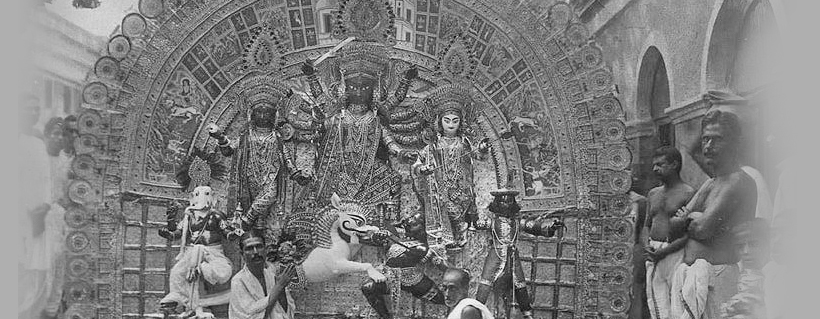
This ancient understanding has seamlessly flowed into later cultural practices, including the popular festivals that millions of Indians participate every year. For instance, during the Durgā Pūjā in Bengal, artisans known as mūrtikāras spend weeks shaping the image of Devī Durgā from soft river clay. They build the framework from bamboo, fill it with straw, apply layers of clay, paint it with vibrant colours, and finally give it form, expression, and personality. The moment the idol is completed, it is adorned with cloth, jewellery, flowers, and ornaments, and for the next few days it becomes the centre of devotion. Families, communities, and entire cities come together before the goddess, celebrating her victory over adharma and her protective presence in their lives. Yet after the days of worship are over, the same beautifully crafted idol is carried in a procession and immersed into a river. There is celebration, but also a softness of emotion, as people bid farewell to a form that they had lovingly worshipped. The clay dissolves back into the water, the colours fade, and the idol disappears. But the idea of śakti, the energy and strength that Durgā symbolizes, remains alive within every devotee. Far from being an act of destruction, the immersion is a symbolic return: clay to clay, water to water, form to formlessness. It reminds everyone that what is temporary must return to nature, and what is eternal must be held in memory and in the heart.
The same civilizational rhythm is visible in Maharashtra during Gaṇeśa Caturthī. Here too, the clay idol of Gaṇeśa, the remover of obstacles, is lovingly shaped, welcomed into homes and public spaces, worshipped through pūjā, ārati, and naivedya (food offerings), and then accompanied with music and chanting to its immersion. People know that the idol will dissolve in water, but they also know that ‘Gaṇeśa-tattva’ does not dissolve with it. His presence, blessings, and meaning remain. The cycle of making, worshipping, and immersing the idol teaches that beauty, devotion, and sacredness do not depend on physical permanence. Instead, they reveal that the sacred can enter a temporary form, illuminate it for a while, and then withdraw, leaving behind an imprint on the minds of the devotees. The philosophy is the same as that of the yajña-maṇḍapa: a sacred form is created for a purpose, honoured while it serves that purpose, and finally released, allowing the eternal idea behind it to shine in the minds of people rather than in the physical world.
This repeated cultural pattern shows the Indian ability to hold two levels of truth at the same time. On one hand, people feel genuine affection and emotional connection to the idol or ritual space they create. They decorate it, pray before it, and consider it divine. On the other hand, they have no hesitation in letting it go when the time comes. Such a balanced approach teaches a remarkable lesson in anāsakti (non-possessiveness). Indians learn from childhood that one can love deeply without clinging, and one can revere something intensely without needing to own it forever. This is a sophisticated cultural training in understanding the difference between physical matter and spiritual meaning.
Furthermore, these rituals align beautifully with the Indian observation of nature. Everything in nature follows a cycle: plants sprout, bloom, and decay; rivers swell and shrink; and the moon waxes and wanes. By making sacred structures temporary, Indian civilization affirms its harmony with the natural laws of creation and dissolution. This is why ‘visarjana’ is not seen as an end but as a transformation. The mūrti made of clay returns to the pañca-bhūta, the five elements (earth, water, fire, air, and space). Through this act, Indians symbolically acknowledge that all physical forms arise from these elements and eventually merge back into them. What remains afterwards is not the object but the ideal, not the body but the spirit.
From a student’s perspective, this tradition teaches something profound: even though forms change, the values behind them do not. The Durgā idol may dissolve, but the ideal of inner strength remains. The Gaṇeśa idol may disappear, but the importance of wisdom and clarity stays alive. The yajña-maṇḍapa may be dismantled, but the commitment to harmony, gratitude, and cosmic order endures. Through these practices, Indian civilization subtly communicates that permanence does not belong to physical objects but to the truths they embody. This understanding helps develop a flexible mind— one that appreciates beauty without becoming attached to it and one that honours tradition without mistaking symbols for the essential reality.
In a world that increasingly values material possession and permanence, Indian festivals gently remind society that meaning is not tied to physical durability. A clay idol can be sacred for ten days and still be allowed to dissolve. A bamboo maṇḍapa can be revered for a day and then dismantled with respect. What gives them sanctity is not the material but the intention, not the form but the faith, not the structure but the symbolism. The Indian approach therefore encourages people to look beyond the outer appearance and recognize the lasting essence that lies beneath. This is why the cycle of creation, worship, and dissolution is not only a ritual but also a philosophy— one that expresses the deepest insights of Indian thought in a way that even children and school students can understand through lived experience.
In this sense, the yajña-maṇḍapa and the festival idols are not just cultural objects but philosophical educators. They teach that life itself is like a sacred structure: created, lived, and finally dissolved. But the values, actions, and meanings we create endure beyond physical form. Indian civilization thus invites every individual to participate in a worldview where the temporary and the eternal coexist gracefully. The temporary reminds us of humility, while the eternal inspires strength. Together, they form a civilizational ethos that has remained vibrant for millennia— a way of seeing the world where forms may fade, but truth does not!
