
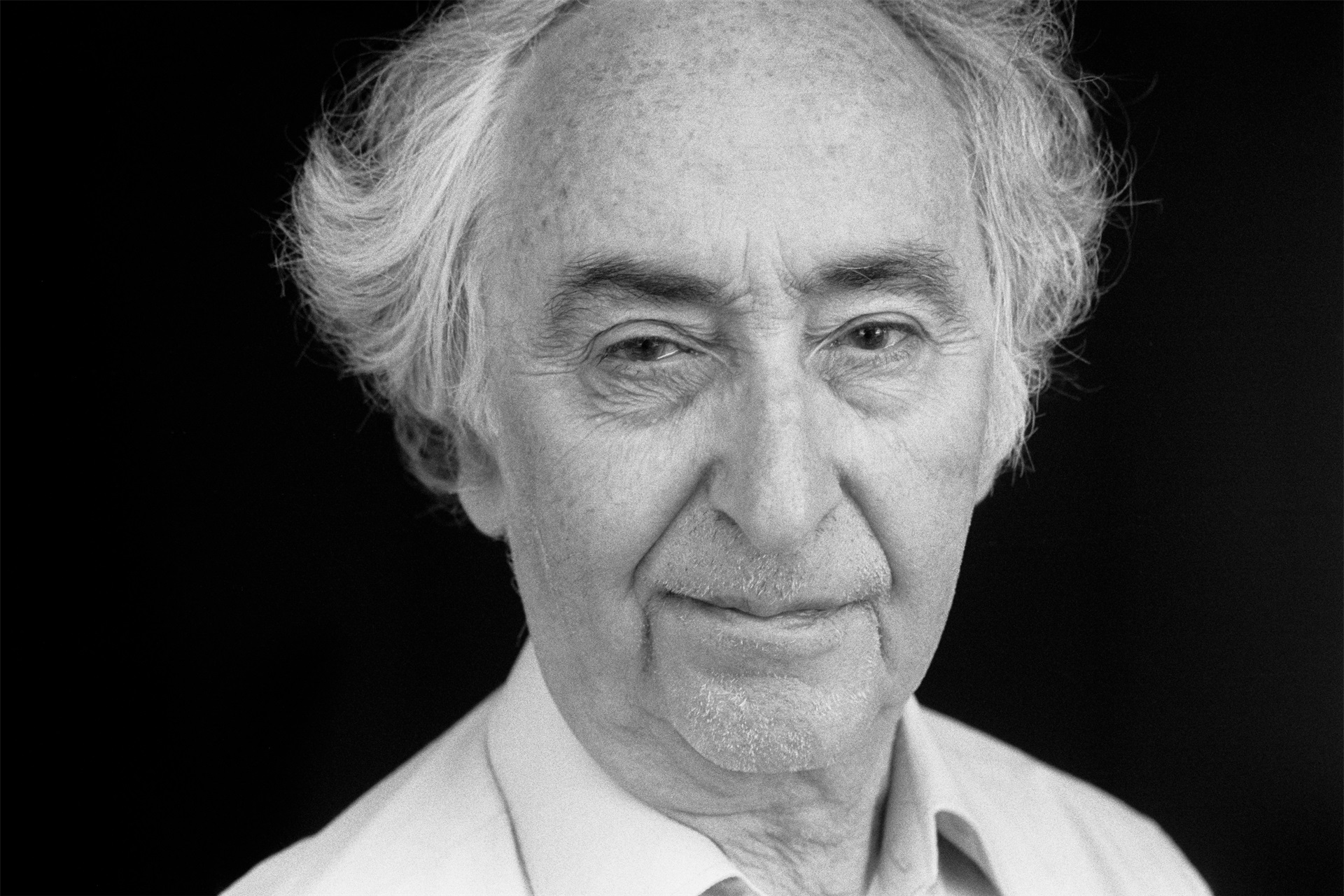
Can consciousness be fully explained through the study of matter, or does the relationship between mind and the physical world require a broader conceptual framework? This question has occupied philosophers for centuries and increasingly concerns scientists working across physics, neuroscience, and cognitive studies. Brian Josephson, the British physicist who received the 1973 Nobel Prize in Physics for his theoretical predictions concerning superconducting currents through tunnel barriers, has also pursued questions about mind, meaning, and the foundations of scientific explanation.
Josephson’s interest in consciousness offers an opportunity to reconsider the relationship between contemporary scientific inquiry and the Vedic understanding of awareness. The comparison must, however, be approached carefully. Josephson is not a representative of Vedic philosophy, and his scientific work does not establish the metaphysical claims of the Upaniṣads. His importance for this discussion lies in his willingness to question whether conventional physical descriptions are sufficient to account for all the phenomena associated with mind and meaning.
In his article The Physics of Mind and Thought, Josephson argues that conventional physics does not adequately address phenomena involving mind and meaning. He proposes exploring ways in which insights from physics, biology, and the study of information might be brought into a more integrated account. His discussion considers how complex mental functions may develop through successive layers of organisation and how meaning depends upon relationships among systems rather than isolated physical components.
These questions provide a useful starting point for a dialogue with Indian philosophical traditions, which have long investigated the relationship between awareness, the mind, and the reality in which experience occurs.
The Limits of a Purely Physical Description
Physics has achieved extraordinary success in describing the behaviour of physical systems. It explains relationships among matter, energy, forces, and measurable processes with remarkable precision. Yet the description of physical processes does not automatically answer every question concerning subjective experience.
For example, a physical account of the processes involved in seeing may describe how light reaches the eye, how signals travel through the nervous system, and how neural activity correlates with perception. Such explanations are indispensable. Nevertheless, the question of how these processes relate to the felt experience of seeing remains a subject of philosophical and scientific debate.
Josephson’s work raises concerns about the conceptual boundaries of conventional physics. In The Physics of Mind and Thought, he examines how meaning, interpretation, and organised relationships contribute to mental functions. His interest extends beyond treating the mind as a collection of isolated computational operations, towards considering how meaningful behaviour develops through structured interactions among systems.
This position should not be confused with the claim that physics has proved consciousness to be independent of the brain or that quantum mechanics establishes the existence of a universal mind. Such conclusions do not follow from the existence of unresolved questions in the science of consciousness.
The more defensible point is that explanatory success in one domain does not necessarily settle every philosophical question about reality. The physical mechanisms associated with perception and cognition may be studied scientifically, while the conceptual relationship between physical processes, subjective experience, and meaning remains open to further investigation.
This distinction creates space for a serious conversation between contemporary science and Indian philosophical traditions without requiring either to abandon its methods.
The Vedic and Upaniṣadic Inquiry into Awareness
The Vedic and Upaniṣadic traditions do not offer a single, uniform theory of consciousness. They contain different approaches to cosmology, ritual, knowledge, selfhood, and ultimate reality. Nevertheless, several Upaniṣads make the nature of awareness a central philosophical concern.
The Kena Upaniṣad asks what directs the mind and enables speech, sight, and hearing. Its response points towards that which cannot be grasped as an ordinary object but through which these faculties operate. The text therefore shifts the inquiry from the objects of knowledge towards the condition that makes knowing possible.
The Māṇḍūkya Upaniṣad examines waking, dreaming, and deep sleep before introducing turīya, which cannot simply be equated with another ordinary state of consciousness. The Bṛhadāraṇyaka Upaniṣad investigates the self through questions concerning the knower and the limits of objectifying knowledge. These texts suggest that the investigation of consciousness may require attention not only to the contents of experience but also to the conditions under which experience becomes manifest.
The Sanskrit terms cit and caitanya acquire particular importance in later Indian philosophical traditions, although their precise meanings vary across contexts. In Advaita Vedānta, consciousness is closely associated with the self’s fundamental nature and the ultimate reality of Brahman. Other Indian schools offer different accounts of the self, cognition, and liberation.
These philosophical approaches are not equivalent to Josephson’s research programme. Their questions, methods, and standards of justification differ. The comparison is valuable because both the Upaniṣadic inquiry and Josephson’s work challenge the assumption that a complete understanding of reality can be achieved without carefully examining the role of awareness and meaning.
Mind, Meaning, and the Organisation of Experience
One of Josephson’s important concerns is that mental activity cannot always be understood by examining physical components in isolation. In his account, biological and cognitive systems develop through relationships that enable information to acquire significance. His discussion of semiotics, the study of signs and meaning, explores how systems interpret signals and coordinate their activities. He suggests that a broader approach to physics might need to account for the role of such relationships in the development of complex forms of organisation.
This emphasis on relationships offers an interesting comparison with Indian philosophical reflections on cognition. Indian thinkers have examined how perception, memory, inference, and conceptual construction contribute to knowledge. The Nyāya Sūtra, for example, investigates valid means of knowledge, while Buddhist epistemological traditions analyse the processes through which cognition apprehends its objects. These traditions do not necessarily treat consciousness as a universal metaphysical substance, but they demonstrate the diversity and sophistication of Indian inquiry into knowing.
The comparison also reveals an important difference. Josephson’s work on mind and meaning seeks a possible synthesis among scientific disciplines. It examines the mechanisms through which meaningful activity develops within organised systems. The Upaniṣadic inquiry, by contrast, often asks whether the knowing principle can be understood entirely through the objects and processes it illuminates.
One approach investigates how cognition functions and becomes organised. The other may ask what the existence of knowing reveals about the nature of the self and reality. These questions can inform one another, but they are not interchangeable.
A productive dialogue must preserve this distinction. It should neither reduce the Upaniṣads to primitive versions of contemporary science nor assume that modern scientific theories merely repeat ancient metaphysical claims.
Quantum Physics and the Problem of the Observer
Josephson has also explored questions concerning quantum theory, observation, and the relationship between physical descriptions and mental processes. His writings have considered whether conventional accounts of nature leave important questions about the observer unresolved and whether future approaches might connect physics more closely with biological organisation and meaning.
These proposals belong to an exploratory and sometimes controversial area of scientific thought. They should not be presented as established conclusions of quantum mechanics. In particular, the role of measurement in quantum theory does not demonstrate that human consciousness creates physical reality, nor does it prove that the universe is fundamentally mental.
Nevertheless, the problem of the observer is philosophically significant. Scientific knowledge is produced through acts of observation, measurement, interpretation, and model construction. Understanding the relationship between these activities and the world they describe remains an important methodological concern.
The Kena Upaniṣad approaches a related question from a different direction. It asks what enables the mind to know and whether the ultimate ground of awareness can itself become an ordinary object of knowledge. The Upaniṣadic question is not a statement about quantum measurement, but a philosophical inquiry into the limits of the knowing subject.
The comparison is therefore conceptual rather than evidential. Quantum physics does not validate the metaphysics of the Kena Upaniṣad, and the Upaniṣad does not supply a scientific interpretation of quantum mechanics. Both, in different ways, encourage reflection on the relationship between the observer, the process of knowing, and the reality being investigated.
Towards an Interdisciplinary Study of Consciousness
Josephson’s work invites researchers to question rigid divisions between physics, biology, and the study of mind. His interest in meaning and organised relationships suggests that understanding complex mental phenomena may require conceptual resources that extend beyond the analysis of isolated physical components. Whether his proposed connections ultimately prove successful is a question for continuing scientific and philosophical investigation.
For the Centre for Vedic and Consciousness Studies, this offers an opportunity to develop an interdisciplinary programme that brings Indian philosophical sources into conversation with contemporary research. Such a programme must distinguish empirical findings from metaphysical interpretations, historical textual analysis from contemporary application, and philosophical analogy from scientific evidence.
The Kena Upaniṣad can contribute a sustained inquiry into the knower. The Māṇḍūkya Upaniṣad can provide a framework for investigating different conditions of experience. Indian theories of knowledge can illuminate the distinctions between perception, inference, conceptual understanding, and direct awareness. Contemporary science, meanwhile, can investigate the neural, biological, and physical processes associated with cognition.
No single approach necessarily answers every question. Scientific investigation can establish relationships among physical processes and reports of experience, while philosophical inquiry can clarify what is meant by consciousness, knowledge, and subjectivity. Contemplative traditions can also provide first-person methods of investigating experience, although claims derived from such methods require careful interpretation and cannot automatically be treated as publicly established scientific facts.
Conclusion: A Dialogue Without False Equivalence
Brian Josephson’s interest in mind, meaning, and the limits of conventional physical explanation makes his work relevant to contemporary discussions of consciousness. His proposals encourage researchers to examine whether the relationship between physical systems and meaningful mental activity can be understood through a more integrated framework.
The Vedic and Upaniṣadic traditions approach consciousness through different intellectual and practical concerns. Their inquiries into ātman, Brahman, and the nature of the knower cannot simply be translated into the vocabulary of modern physics. Yet they can contribute philosophical questions that remain significant when science investigates the relationship between brain processes, subjective experience, and knowledge.
The value of this dialogue lies neither in claiming that ancient texts anticipated every modern discovery nor in treating contemporary science as a confirmation of spiritual doctrines. It lies in bringing different forms of inquiry into a disciplined conversation, allowing each to clarify its assumptions and recognise its limitations.
For the Centre for Vedic and Consciousness Studies, Josephson’s work provides a useful contemporary point of departure. It encourages the study of consciousness as a problem that crosses disciplinary boundaries, while the Upaniṣads remind us that the investigation of knowing may also require examining the knower. The challenge is to develop a framework in which scientific precision, philosophical clarity, and serious engagement with Indian intellectual traditions can enrich one another without erasing their fundamental differences.

