
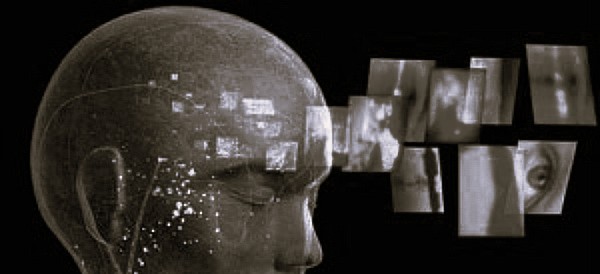
Modern science has made extraordinary progress in understanding the human brain. Researchers can investigate neural activity associated with perception, memory, emotion, attention, and decision-making. They can identify brain regions involved in particular cognitive functions and examine how changes in neural activity influence experience and behaviour. Yet one fundamental question remains contested: why are these physical processes accompanied by subjective experience?
A brain can be described in terms of electrical impulses, chemical interactions, and networks of neurons. A person, however, does not experience life as a collection of neural events. The person experiences the redness of a flower, the warmth of sunlight, the taste of food, the pain of an injury, and the emotional significance of a memory. There is something it feels like to undergo these experiences. How this subjective dimension relates to the physical processes of the brain remains one of the central problems in the philosophy of consciousness.
This difficulty is commonly known as the hard problem of consciousness, a term associated with philosopher David Chalmers. It concerns the challenge of explaining why physical information-processing should give rise to experience at all. The problem does not deny the importance of neuroscience. Rather, it asks whether an explanation of the mechanisms associated with consciousness necessarily explains the existence of conscious experience itself.
The Success and Limits of Physicalism
Physicalism is the broad philosophical position that reality is fundamentally physical, or that everything that exists is ultimately grounded in the physical. In the philosophy of mind, physicalist theories attempt to explain consciousness through physical processes, including those occurring in the brain.
There are several versions of physicalism. Some theories identify mental states with brain states. Others explain mental phenomena through their functional roles, such as the ways in which they process information, influence behaviour, and interact with other mental states. Non-reductive physicalists maintain that psychological explanations may remain indispensable even if mental phenomena depend entirely upon physical systems.
These approaches have considerable strengths. They connect theories of the mind with empirical investigation and permit researchers to examine how consciousness changes under different physical conditions. Brain injuries, anaesthesia, sleep, neurological disorders, and pharmacological interventions provide evidence that conscious experience is deeply connected with bodily and neural processes.
The difficulty arises when a distinction is made between explaining the mechanisms of cognition and explaining the subjective character of experience. A scientific account may explain how the brain discriminates colours, identifies objects, and directs attention towards particular stimuli. Yet critics ask whether these explanations also account for why the discrimination of colour is accompanied by the experience of seeing colour.
The challenge is not that neuroscience has discovered nothing about consciousness. It is that the relationship between physical explanation and subjective experience remains philosophically disputed. Demonstrating that particular neural processes are necessary for an experience does not, by itself, settle what consciousness is or why those processes are accompanied by experience.
The Problem of Subjective Experience
Philosophers often use the term qualia to refer to the qualitative aspects of experience, such as the felt character of pain or the appearance of a particular colour. The term is controversial because philosophers disagree about whether these qualities are irreducible features of consciousness or whether their apparent distinctiveness can be explained through cognitive and perceptual processes.
Consider the experience of seeing a red flower. A physical explanation can describe the light reflected by the flower, the response of the eye, the transmission of neural signals, and the brain processes involved in colour perception. It can also explain how the person distinguishes red from blue or identifies the flower as an object.
But the philosophical question remains: why does this information-processing have a subjective character? Why is there an experience of redness rather than merely a system that detects and responds to wavelengths of light?
A physicalist may respond that this question assumes a separation between physical processes and experience that a sufficiently developed scientific theory could eventually overcome. A critic may argue that even a complete account of the mechanisms would leave the subjective character unexplained.
Neither position can simply be assumed to have won the debate. The disagreement concerns what counts as an adequate explanation. If consciousness is defined entirely in functional terms, an explanation of its mechanisms may be sufficient. If subjective experience has features that cannot be captured by functional descriptions alone, additional conceptual work may be required.
The hard problem therefore exposes a distinction between explaining what consciousness does and explaining what conscious experience is like.
The Knowledge Argument
One influential challenge to physicalism is the knowledge argument associated with philosopher Frank Jackson. It asks us to imagine a scientist who knows every physical fact about colour vision but has lived in a monochromatic environment and has never experienced colour.
When the scientist first sees a red object, does she learn something new? If she acquires knowledge of what experiencing red is like, the argument suggests that complete knowledge of physical facts may not exhaust everything there is to know about experience.
The argument has generated extensive debate. Physicalists have proposed that the scientist acquires a new ability, a new way of recognising an experience, or a new form of acquaintance with something she already understood physically. Critics question whether these responses fully capture the difference between knowing all the relevant facts and undergoing the experience itself.
The thought experiment does not establish that consciousness is non-physical. Its significance lies in exposing a possible gap between objective descriptions and first-person experience. It asks whether knowing how a process operates is equivalent to knowing what that process feels like from the perspective of the experiencing subject.
This distinction matters because scientific knowledge is ordinarily expressed through publicly accessible observations, measurements, and explanatory models, while subjective experience is initially available to the person undergoing it.
Is the Hard Problem a Genuine Problem?
Not all philosophers accept that the hard problem requires a separate metaphysical explanation. Some argue that the difficulty arises from the way people think about consciousness rather than from an actual gap in nature. Daniel Dennett, for example, challenges several assumptions associated with the idea that subjective qualities must exist as private properties over and above the cognitive processes that can be investigated scientifically.
From this perspective, the task is to explain the capacities through which human beings report experiences, discriminate sensations, attend to information, and construct models of themselves and their surroundings. Once these capacities are understood, the apparent mystery of an additional inner property may dissolve.
Critics respond that explaining reports and behavioural capacities is not necessarily the same as explaining the experience being reported. A system might conceivably process information about pain and behave as though it were in pain, yet the question remains whether there is something it feels like to be that system.
The disagreement reveals a difficulty in defining the target of investigation. Consciousness can refer to wakefulness, attention, access to information, self-awareness, or subjective experience. Different theories may explain one of these dimensions without explaining all the others. A theory that accounts for conscious access, for example, may not automatically settle the question of phenomenal experience.
The first problem, therefore, is not simply that science has failed to discover the answer. It is that researchers and philosophers must establish precisely what needs explaining.
A Comparative Question from the Upaniṣads
The Upaniṣads approach the question of consciousness through a different philosophical vocabulary. The Kena Upaniṣad asks what enables the mind to think and the senses to function. Its inquiry directs attention towards that which makes knowing possible but cannot itself be grasped as an ordinary object of knowledge.
The Bṛhadāraṇyaka Upaniṣad similarly investigates the relationship between the knower and what is known. The Māṇḍūkya Upaniṣad examines waking, dreaming, and deep sleep in its exploration of consciousness and the self.
These texts should not be treated as ancient scientific explanations of neural processes, nor should their metaphysical claims be regarded as established answers to the hard problem. Their methods and assumptions differ from those of contemporary neuroscience. Nevertheless, they introduce a philosophical question that remains relevant: can the nature of awareness be adequately understood by examining only the objects and processes that awareness makes available?
In Advaita Vedānta, consciousness is associated with ātman and its relationship with Brahman. Other Indian philosophical traditions offer different accounts of cognition and the self. The diversity of these positions makes it inappropriate to speak of a single, universally accepted Vedic theory of consciousness.
What the Upaniṣadic inquiry contributes is an alternative starting point. Rather than asking only how physical processes produce mental functions, it also asks what it means for anything to be experienced or known.
Conclusion: What Would Count as an Explanation?
The hard problem of consciousness reveals a significant challenge for contemporary philosophy and science. Physical explanations have greatly advanced our understanding of the mechanisms associated with perception, cognition, and awareness. Yet the relationship between these mechanisms and subjective experience remains disputed.
The principal limitation of physicalism is not that it has achieved nothing, but that its explanatory success does not automatically settle every philosophical question about consciousness. Whether the subjective dimension can ultimately be explained through physical processes remains an open debate.
For the Centre for Vedic and Consciousness Studies, this debate offers a useful foundation for comparative inquiry. The Western philosophical discussion clarifies the distinction between the mechanisms of cognition and the felt character of experience. The Upaniṣadic tradition adds a different question concerning the nature of the knower and the conditions of knowing.
A productive dialogue should not assume that either framework has already resolved the other’s problems. Instead, it should examine their different starting points, methods, and assumptions. The central question remains compelling: when we explain everything the brain does, have we also explained what it means to be conscious?

